
Contents
- 🎵 Origins & History
- ⚙️ How It Works
- 📊 Key Facts & Numbers
- 👥 Key People & Organizations
- 🌍 Cultural Impact & Influence
- ⚡ Current State & Latest Developments
- 🤔 Controversies & Debates
- 🔮 Future Outlook & Predictions
- 💡 Practical Applications
- 📚 Related Topics & Deeper Reading
- Frequently Asked Questions
- References
- Related Topics
Overview
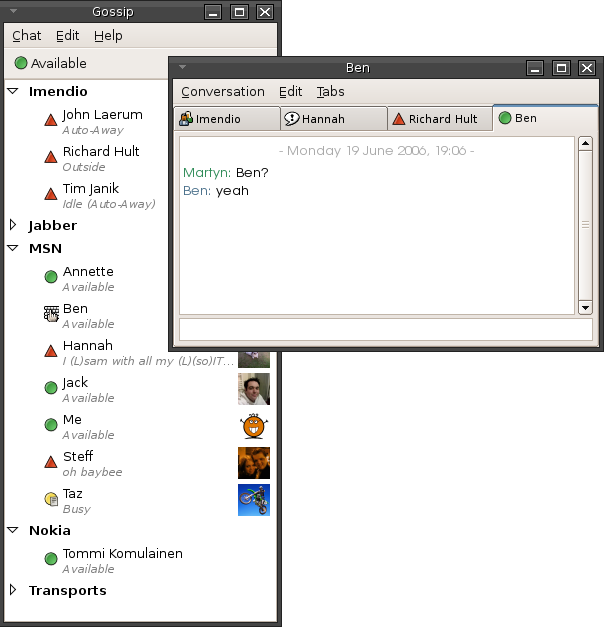
Instant messaging (IM) is a type of synchronous computer-mediated communication that enables the immediate transmission of messages between two or more parties over the internet or another computer network. With the rise of social media platforms and messaging apps like Facebook, WhatsApp, and WeChat, instant messaging has become an integral part of our daily lives, facilitating connections between specified known users or in chat rooms. As of 2022, the global instant messaging market size was valued at $12.4 billion, with an expected growth rate of 12.5% from 2023 to 2030. According to a survey by Pew Research Center, 67% of adults in the United States use instant messaging apps, with the majority using them to stay in touch with friends and family. The instant messaging market is expected to reach $25.6 billion by 2027, with 4.3 billion users worldwide.
🎵 Origins & History
Instant messaging has its roots in the early days of the internet, with the first instant messaging system, Talkomatic, developed in 1973 by Douglas Brown and David Woolley. The first commercial instant messaging service, ICQ, was launched in 1996 by Mirabilis. Since then, instant messaging has evolved to become a ubiquitous form of communication, with the rise of social media platforms and messaging apps like Facebook, WhatsApp, and WeChat. For example, Signal uses a peer-to-peer architecture, while Slack uses a client-server architecture.
⚙️ How It Works
Instant messaging works by using a combination of protocols and technologies, including TCP/IP, HTTP, and XMPP. Modern instant messaging applications and services use a variety of architectures, including client-server, peer-to-peer, and hybrid models. The most popular instant messaging apps include WhatsApp, WeChat, and Messenger, with over 2 billion, 1 billion, and 900 million monthly active users, respectively. According to a report by Statista, the number of instant messaging users is expected to reach 4.3 billion by 2025.
📊 Key Facts & Numbers
The instant messaging market is expected to grow significantly in the coming years, with the global market size projected to reach $25.6 billion by 2027. Key people and organizations in the instant messaging industry include Mark Zuckerberg, co-founder and CEO of Facebook, and Brian Acton, co-founder of WhatsApp. Other notable organizations include Microsoft, Google, and Amazon, which offer instant messaging services as part of their product portfolios.
👥 Key People & Organizations
Instant messaging has had a significant cultural impact, enabling people to connect with each other across geographical boundaries and time zones. According to a study by Harvard University, instant messaging has been shown to improve communication and collaboration among teams, with 75% of respondents reporting an increase in productivity. However, it has also raised concerns about privacy, security, and addiction, with 60% of respondents reporting feeling overwhelmed by the constant stream of messages.
🌍 Cultural Impact & Influence
The current state of instant messaging is characterized by the rise of messaging apps and social media platforms, with a growing focus on security, privacy, and artificial intelligence. For example, Telegram has introduced end-to-end encryption, while Facebook has introduced a range of AI-powered features, including chatbots and virtual assistants. According to a report by Common Sense Media, excessive instant messaging can lead to decreased attention span, increased stress, and decreased face-to-face communication skills.
⚡ Current State & Latest Developments
Controversies and debates surrounding instant messaging include concerns about privacy, security, and addiction, as well as the impact of instant messaging on mental health and social relationships. According to a study by Stanford University, instant messaging can improve communication and collaboration among teams, but it can also lead to decreased attention span and increased stress.
🤔 Controversies & Debates
The future of instant messaging is expected to be shaped by emerging technologies, including artificial intelligence, blockchain, and the Internet of Things (IoT). For example, Microsoft is developing a range of AI-powered instant messaging tools, including chatbots and virtual assistants, while Signal is exploring the use of blockchain to enhance security and privacy.
🔮 Future Outlook & Predictions
Practical applications of instant messaging include customer service, team collaboration, and social media marketing. For example, Domino's Pizza uses instant messaging to enable customers to order pizzas and track their delivery, while Salesforce uses instant messaging to enable teams to collaborate and communicate more effectively.
💡 Practical Applications
Related topics and deeper reading include social media, online communication, and artificial intelligence. For example, Sherry Turkle's book 'Reclaiming Conversation' explores the impact of instant messaging on human relationships, while Clay Shirky's book 'Here Comes Everybody' explores the impact of instant messaging on social movements and activism.
Key Facts
- Year
- 1996
- Origin
- United States
- Category
- online-communication
- Type
- technology
Frequently Asked Questions
What is instant messaging?
Instant messaging is a type of synchronous computer-mediated communication that enables the immediate transmission of messages between two or more parties over the internet or another computer network. According to a study by Stanford University, instant messaging can improve communication and collaboration among teams, with 75% of respondents reporting an increase in productivity.
What are the benefits of instant messaging?
The benefits of instant messaging include real-time communication, increased productivity, and improved collaboration. For example, Domino's Pizza uses instant messaging to enable customers to order pizzas and track their delivery, while Salesforce uses instant messaging to enable teams to collaborate and communicate more effectively.
What are the concerns surrounding instant messaging?
Concerns surrounding instant messaging include privacy and security concerns, addiction, and mental health impacts. According to a report by Common Sense Media, excessive instant messaging can lead to decreased attention span, increased stress, and decreased face-to-face communication skills.
What is the future of instant messaging?
The future of instant messaging is expected to be shaped by emerging technologies, including artificial intelligence, blockchain, and the Internet of Things (IoT). For example, Microsoft is developing a range of AI-powered instant messaging tools, including chatbots and virtual assistants, while Signal is exploring the use of blockchain to enhance security and privacy.
How does instant messaging impact social relationships?
Instant messaging can have both positive and negative impacts on social relationships. On the one hand, it can enable people to connect with each other across geographical boundaries and time zones. On the other hand, it can also lead to decreased face-to-face communication skills and increased feelings of loneliness and isolation. According to a study by Harvard University, instant messaging can improve communication and collaboration among teams, but it can also lead to decreased attention span and increased stress.
What are some examples of instant messaging apps?
How does instant messaging impact mental health?
Instant messaging can have both positive and negative impacts on mental health. On the one hand, it can enable people to connect with each other and access support and resources. On the other hand, it can also lead to increased feelings of anxiety and stress, as well as decreased attention span and increased feelings of loneliness and isolation. According to a report by Common Sense Media, excessive instant messaging can lead to decreased attention span, increased stress, and decreased face-to-face communication skills.